

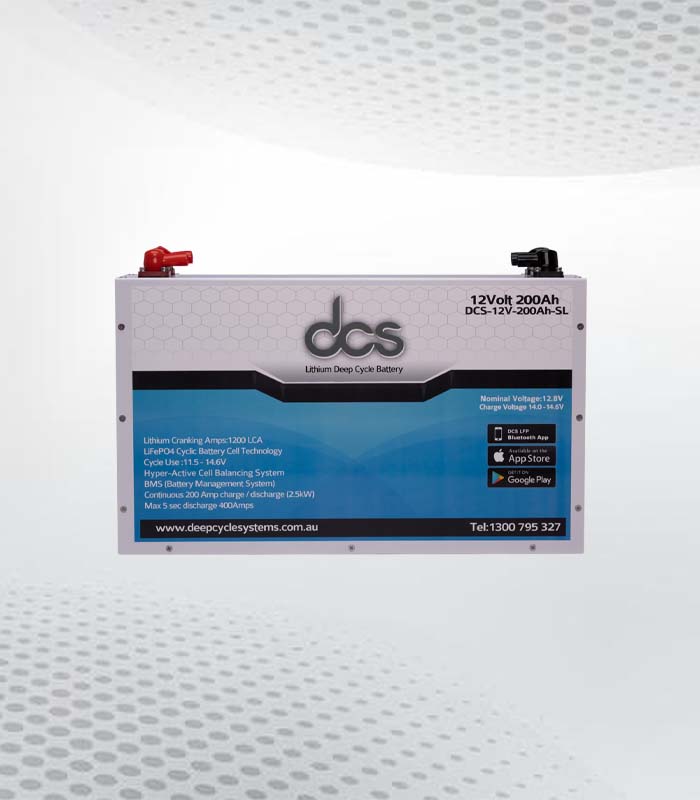

Are you familiar with the latest advancements in battery technology? If not, let’s look at the 200-ah Lithium Battery. This cutting-edge battery has been making waves in the market due to its incredible functionality and efficiency. It has become popular for various applications, from powering electric vehicles to storing renewable energy. But what exactly is a 200-ah Lithium Battery and how does it work? This blog post, will explore the ins and outs of this powerful battery and discover its many uses. Get ready to be engaged and learn more about the functionality of the 200ah Lithium Battery.
What is a 200-ah Lithium Battery?
If you’re looking for a battery with serious power, the 200-ah Lithium Battery might be just what you need. But what exactly is it? It’s a rechargeable battery that uses lithium ions to store and release energy. The “200Ah” refers to its capacity – basically, the more Ah, the more energy it can store.
What’s great about lithium batteries is their high energy density. This means they can store more energy per unit of weight or volume than other types of batteries. So, a lithium battery can be smaller and lighter than a comparable lead-acid battery, but still deliver the same amount of power.
Inside a 200-ah Lithium Battery, several cells are connected in series or parallel. Each cell contains a cathode, an anode, and an electrolyte. Lithium ions move from the cathode to the anode when the battery is charged through the electrolyte, storing energy in the process. When the battery is discharged, the process is reversed and the lithium ions move from the anode to the cathode, releasing energy.
The 200-ah Lithium Battery is a powerful, lightweight, and efficient way to store and release energy.
Unravelling the Lithium Advantage
So why should you choose a 200-ah Lithium Battery over other types of batteries on the market? Well, it all comes down to the lithium advantage. Lithium batteries have a higher energy density than other types of batteries, which means they can store more energy per unit of weight or volume. This makes them ideal for applications where space and weight are a concern.
Lithium batteries are known for their longer cycle life, meaning they can last for more charge/discharge cycles than other batteries. This makes them a cost-effective choice in the long run.
But that’s not all – lithium batteries are also more efficient than other types of batteries, with a lower self-discharge rate and a faster charging time. This means less time spent waiting for your battery to charge and more time spent using it.
Finally, let’s not forget about safety. Lithium batteries are generally considered safer than other types of batteries, with less risk of explosion or leakage. Of course, handling any battery carefully and following the manufacturer’s instructions for safe usage and disposal is always important.
The lithium advantage makes the 200-ah Lithium Battery a reliable and efficient choice for various applications.
Anatomy of a 200-ah Lithium Battery
Have you ever wondered what’s inside a 200-ah Lithium Battery? Well, wonder no more! Inside a typical 200-ah Lithium Battery, several cells are connected in series or parallel. Each cell consists of a cathode, an anode, and an electrolyte.
Lithium ions move from the cathode to the anode when the battery is charged through the electrolyte, storing energy in the process. The process is reversed when the battery is discharged, and the lithium ions move from the anode to the cathode, releasing energy.
But what makes lithium batteries so special? It’s all down to their high energy density, which means they can store more energy per unit of weight or volume than other types of batteries. This makes them perfect for applications where space and weight are a concern.
And let’s not forget their longer cycle life and lower self-discharge rate, which means they’re more cost-effective in the long run. Plus, they’re generally considered safer than other types of batteries, which is always a bonus.
So, the anatomy of a 200-ah Lithium Battery might be small, but it sure packs a punch when storing and releasing energy!
The Working Principle of a 200-ah Lithium Battery
The working principle of the 200-ah Lithium Battery is fascinating. When you charge the battery, you apply an external voltage that makes lithium ions move from the cathode to the anode through the electrolyte. This movement stores energy in the battery.
But when you discharge the battery, the process is reversed, and the lithium ions move from the anode to the cathode, releasing energy. It’s like a constant dance between the cathode and anode, with lithium ions as the dancers.
But what’s amazing is that this process happens repeatedly, allowing you to use the battery multiple times. And thanks to its high energy density, the 200-ah Lithium Battery can store and release much energy, making it perfect for various applications.
So, whether you need a reliable power source for your electric vehicle, off-grid solar system, or marine application, the 200-ah Lithium Battery has covered you. It’s efficient, powerful, and safe – a true technological wonder!
Key Applications of the 200ah Lithium Battery
The 200ah Lithium Battery is a versatile power source that is used in a variety of applications. One of the most common uses is in electric vehicles, where the high energy density and long cycle life make it a reliable and efficient option for powering the vehicle. Similarly, the battery is used in off-grid solar systems, storing energy generated from solar panels for later use.
Another key application is in marine and caravan systems, where the lightweight and compact size of the battery make it an ideal choice for powering onboard electronics and appliances. The battery is also used in backup power systems for homes and businesses, providing a reliable power source during power outages.
Overall, the 200-ah Lithium Battery is a reliable and efficient power source that is used in a wide range of applications. Its high energy density, long cycle life, and fast charging time make it a popular choice for powering everything from electric vehicles to backup power systems.
The Environmental Impact and Safety Aspects
While lithium batteries are generally considered more environmentally friendly than traditional batteries, but it’s important to consider their environmental impact and safety aspects. The production and disposal of lithium batteries can release toxic chemicals and greenhouse gases, so it’s crucial to handle them carefully and dispose of them properly.
Thankfully, steps are being taken to mitigate these environmental impacts. For example, some manufacturers use recycled materials to produce lithium batteries, reducing the need for new resources. Additionally, recycling programmes allow lithium batteries to be safely and responsibly disposed of, with the materials being repurposed for new products.
Regarding safety, lithium batteries are generally considered safer than other types of batteries, with less risk of explosion or leakage. However, it’s still important to handle them with care and follow the manufacturer’s instructions for safe usage and disposal.
With proper handling and disposal, the environmental impact and safety risks of 200Ah lithium batteries can be minimised, making them a reliable and efficient power source for a wide range of applications.
Efficiency Metrics of 200-ah Lithium Battery
When measuring the efficiency of a 200-ah Lithium Battery, several key metrics exist. One of the most important is energy density, which refers to the amount of energy the battery can store per unit of weight or volume.
With a high energy density, the 200-ah Lithium Battery can store much energy in a relatively small and lightweight package, making it ideal for applications where space and weight are a concern.
Another key metric is cycle life, which refers to the number of charge/discharge cycles the battery can withstand before it needs to be replaced.
The longer the cycle life, the more cost-effective the battery is in the long run. With its longer cycle life, the 200-ah Lithium Battery can last many charge/discharge cycles, making it a reliable and efficient power source for many applications.
Finally, self-discharge rate is another important metric to consider. This refers to the rate at which the battery loses its charge when unused. With its lower self-discharge rate, the 200-ah Lithium Battery can hold onto its charge for longer, making it more convenient and efficient.
Charging and Discharging the Battery
Charging and discharging a 200-ah Lithium Battery is a relatively straightforward process. You’ll need a compatible charger and an external power source to charge the battery. Connect the charger to the battery, which will regulate the charging process to ensure the battery is not overcharged or overheated.
Once the battery is fully charged, it’s ready to be used. To discharge the battery, connect it to the device or appliance you want to power. The battery will release energy as needed, providing a reliable and efficient power source.
One of the great things about lithium batteries is their fast charging time. Depending on the charger and power source, a 200-ah Lithium Battery can be fully charged in just a few hours. Plus, with its longer cycle life and lower self-discharge rate, the battery will last many charge/discharge cycles, making it a reliable and cost-effective power source.
Of course, it’s important to follow the manufacturer’s instructions for safe usage and charging. Improper handling or charging can damage the battery or cause a safety hazard. A 200-ah Lithium Battery can provide reliable and efficient power for various applications with proper care and attention.
Future Developments of 200-ah Lithium Battery
As technology advances, so does the potential for even better 200Ah lithium batteries. Ongoing research and development are currently focused on improving these already impressive batteries’ energy density, cycle life, and safety features.
One of the emerging technologies is solid-state electrolytes. These electrolytes can potentially improve the safety and stability of lithium batteries by eliminating the need for flammable liquid electrolytes. This could significantly reduce the risk of battery fires and explosions, making lithium batteries an even safer option for many applications.
Another promising technology is lithium-sulphur batteries. These batteries have the potential to offer even higher energy densities than traditional lithium-ion batteries, which could mean even more power in a smaller and lighter package. Additionally, lithium-sulphur batteries are made from cheaper and more readily available materials, which could reduce the overall cost of these batteries.
Finally, lithium-air batteries are another emerging technology that could offer even higher energy densities than lithium-sulphur batteries. These batteries use oxygen from the air as a reactant, so they don’t need to carry their oxidiser. This could significantly reduce the weight and size of the battery, making it an even more efficient and practical power source.
As these emerging technologies continue to develop, the future of 200Ah lithium batteries looks bright, with even more efficient, powerful, and safer batteries on the horizon.
Efficiency and Longevity of 200Ah Lithium Batteries
To get the most out of your 200-ah Lithium Battery, it’s important to consider its efficiency and longevity. Firstly, the quality of the battery itself plays a significant role in its performance over time. Investing in a high-quality battery from a reputable manufacturer can help ensure that your battery lasts for many charge/discharge cycles and maintains its efficiency throughout its lifespan.
Secondly, charging and discharging the battery can also affect its efficiency and longevity. It’s important to follow the manufacturer’s instructions for safe and efficient charging, and to avoid overcharging or overheating the battery. Discharging the battery too deeply can also affect its performance over time, so it’s important to avoid letting the battery completely discharge if possible.
Finally, the battery’s operating temperature can also affect its efficiency and longevity. Lithium batteries operate best at temperatures between 20°C and 25°C, so it’s important to avoid exposing the battery to extreme temperatures, whether hot or cold.
Overall, by investing in a high-quality 200-ah Lithium Battery, following safe and efficient charging and discharging practices, and maintaining a suitable operating temperature, you can help ensure that your battery remains efficient and lasts for many charge/discharge cycles.
FAQs
The 200-ah Lithium Battery is known for its high energy density, long cycle life, and fast charging time. It can store more energy per unit of weight or volume than other types of batteries, making it a compact and powerful choice for various applications.
2. Are 200Ah lithium batteries safe?
Generally, lithium batteries are safer than other types of batteries, with less risk of explosion or leakage. However, it’s crucial to handle them with care and follow the manufacturer’s instructions for safe usage and disposal.
3. How do I charge a 200-ah Lithium Battery?
You’ll need a compatible charger and an external power source. The charger regulates the charging process to ensure the battery isn’t overcharged or overheated. Always follow the manufacturer’s instructions for safe and efficient charging.
4. What applications are suitable for a 200-ah Lithium Battery?
This versatile battery is used in various applications, including electric vehicles, off-grid solar systems, marine and caravan systems, and backup power systems for homes and businesses.
5. How can I extend the life of my 200-ah Lithium Battery?
To maximise the efficiency and longevity of your battery, avoid overcharging or overheating it, don’t let it completely discharge, and maintain a suitable operating temperature between 20°C and 25°C.
Conclusion
To summarise, the 200-ah Lithium Battery emerges as a powerful, lightweight and reliable energy storage solution. Its high energy density, long cycle life and swift charging time offer significant benefits over traditional batteries. Whether you need to power your electric vehicle, an off-grid solar system or require a backup power supply, this innovative battery can meet diverse energy needs efficiently. You can truly harness its full potential by understanding its workings and adhering to the recommended charging and usage guidelines.
| Other Good Articles to Read |
| skank blogs |
| unreal blogs |
| tba blogs |
| all city forums |
| dany blogs |
| refuge blogs |
| the music blogs |
| key forums |
| the big blog theory |
| joe blogs |
| blogs 4 me |
| Blogs Emon |
| Related Business Listings |
| Directory Submissions |
| Regional Directory |